
Class 9 Biology Chapter 10 Notes – Reproduction in Plants (Punjab Boards, New Syllabus)
Looking for complete Class 9 Biology Chapter 10 notes that explain how plants produce new generations? This page brings together Reproduction in Plants notes for Class 9 Punjab board students in one downloadable PDF — covering asexual and sexual reproduction, flower structure, pollination, and exam-style MCQs, short and long questions — prepared according to the new 2025-26 Punjab Textbook Board syllabus for all Punjab boards.
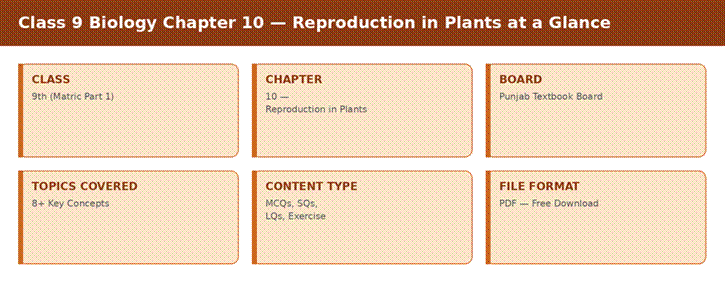
At-a-glance summary of the Class 9 Biology Chapter 10 notes
Chapter 10 Overview
Reproduction in Plants explains how plants multiply and pass on their traits to the next generation, either without a partner (asexually) or through the fusion of male and female gametes (sexually). This diagram-rich chapter is a regular source of long questions in board exams. Here’s a quick snapshot, based on the new 2025-26 syllabus:
| Detail | Information |
| Class | 9th (Matric Part 1) |
| Subject | Biology |
| Chapter | Chapter 10 – Reproduction in Plants (New Syllabus 2025-26) |
| Board | Punjab Textbook Board (PTB) – all Punjab boards |
| Notes Include | MCQs, Short Questions, Long Questions, Solved Exercise |
| File Format | PDF (free download) |
What You’ll Learn in This Chapter
Chapter 10 explains the different ways plants reproduce. The notes are organized around the following core ideas, each covered once so nothing is repeated:
Asexual Reproduction in Plants
Asexual reproduction produces new plants from a single parent without gametes, so offspring are genetically identical to the parent. This section covers natural methods like vegetative propagation (through roots, stems, and leaves) and artificial methods like cutting, grafting, and layering used in agriculture.
Sexual Reproduction and Flower Structure
Sexual reproduction involves the fusion of male and female gametes produced by the flower. This part explains the parts of a flower — stamen (male part) and pistil (female part) — and how each contributes to producing seeds.
Pollination
Pollination is the transfer of pollen grains from the anther to the stigma, the essential first step before fertilization can occur. This section explains the agents of pollination, such as wind, water, insects, and birds.
Self-Pollination vs. Cross-Pollination
Since board exams frequently ask students to differentiate between the two, here’s a quick side-by-side comparison:
| Feature | Self-Pollination | Cross-Pollination |
| Pollen transfer | Same flower or same plant | Different plant of the same species |
| Genetic variation | Low (offspring similar to parent) | High (introduces new gene combinations) |
| Pollinating agent needed | Not always required | Usually needed (wind, insects, water, birds) |
| Example | Pea plant | Most flowering plants |
Fertilization and Seed Formation
Fertilization is the fusion of the male gamete (from pollen) with the female gamete (egg cell) inside the ovule, forming a zygote. This section explains how the fertilized ovule develops into a seed and the ovary develops into a fruit.
Seed Structure and Germination
A seed contains an embryo and stored food, protected by a seed coat. This part covers the basic structure of monocot and dicot seeds and the conditions — water, oxygen, and suitable temperature — required for germination.
Seed Dispersal
Seeds need to move away from the parent plant to reduce competition and colonize new areas. This added section explains the main dispersal agents — wind, water, animals, and explosive mechanisms — and gives examples of seed adaptations for each, a topic frequently tested but often missing from basic notes.
Note: This page focuses on notes structure and downloads. For full diagrams of flower structure, seed anatomy, and germination stages, download the complete PDF using the link below.
What’s Included in These Notes
- Important definitions and key terms explained in simple language
- Complete Multiple Choice Questions (MCQs) with answer keys
- Short Questions (SQs) commonly asked in board papers
- Long Questions (LQs) with exam-style, structured answers
- Fully solved textbook exercise (objective and subjective parts)
- Labeled diagrams of flower structure, seeds, and germination
Applicable For All Punjab Boards
These notes follow the new Punjab Textbook Board syllabus (2025-26), so they apply equally to students across every Punjab board:
| # | BISE Board |
| 1 | BISE Lahore |
| 2 | BISE Rawalpindi |
| 3 | BISE Faisalabad |
| 4 | BISE Gujranwala |
| 5 | BISE Multan |
| 6 | BISE Sargodha |
| 7 | BISE Bahawalpur |
| 8 | BISE Dera Ghazi Khan |
| 9 | BISE Sahiwal |
How to Download the PDF
- Scroll to the download button below this section.
- Tap or click the “Download PDF” button.
- Your Class 9 Biology Chapter 10 notes PDF will start downloading automatically.
- Open the file in any PDF reader — no sign-up or login required.
[ Download Class 9 Biology Chapter 10 Notes PDF ] — CTA button placeholder
Why These Notes Are the Best Choice
- Updated according to the new 2025-26 Punjab Textbook Board syllabus
- Covers MCQs, SQs, LQs, and exercise in a single PDF — no need to search multiple sites
- Includes the Self-Pollination vs. Cross-Pollination comparison and Seed Dispersal topics often missing elsewhere
- 100% free to download, with no registration required
- Valid for students of every Punjab board, not just one city
Frequently Asked Questions (FAQs)
How can I download Class 9 Biology Chapter 10 notes PDF?
Simply click the download button on this page. The PDF will start downloading immediately, and no login or payment is required.
Are these notes valid for all Punjab boards?
Yes. Since they follow the new Punjab Textbook Board syllabus (2025-26), these notes are valid for BISE Lahore, Rawalpindi, Faisalabad, Gujranwala, Multan, Sargodha, Bahawalpur, Dera Ghazi Khan, and Sahiwal.
What is the difference between asexual and sexual reproduction in plants?
Asexual reproduction involves a single parent and produces genetically identical offspring, while sexual reproduction involves the fusion of male and female gametes, producing offspring with genetic variation.
What is the difference between pollination and fertilization?
Pollination is the transfer of pollen from the anther to the stigma, while fertilization is the fusion of the male and female gametes that happens afterward, inside the ovule.
Is this Class 9 Biology Chapter 10 notes PDF free to download?
Yes, the notes are completely free to download, and you do not need to create an account or share personal details.
Explore More Class 9 Biology Notes
Continue your revision with related chapters: Chapter 9 – Plant Physiology notes, and Chapter 11 – Biostatistics notes, both available in the same easy-to-download PDF format.